


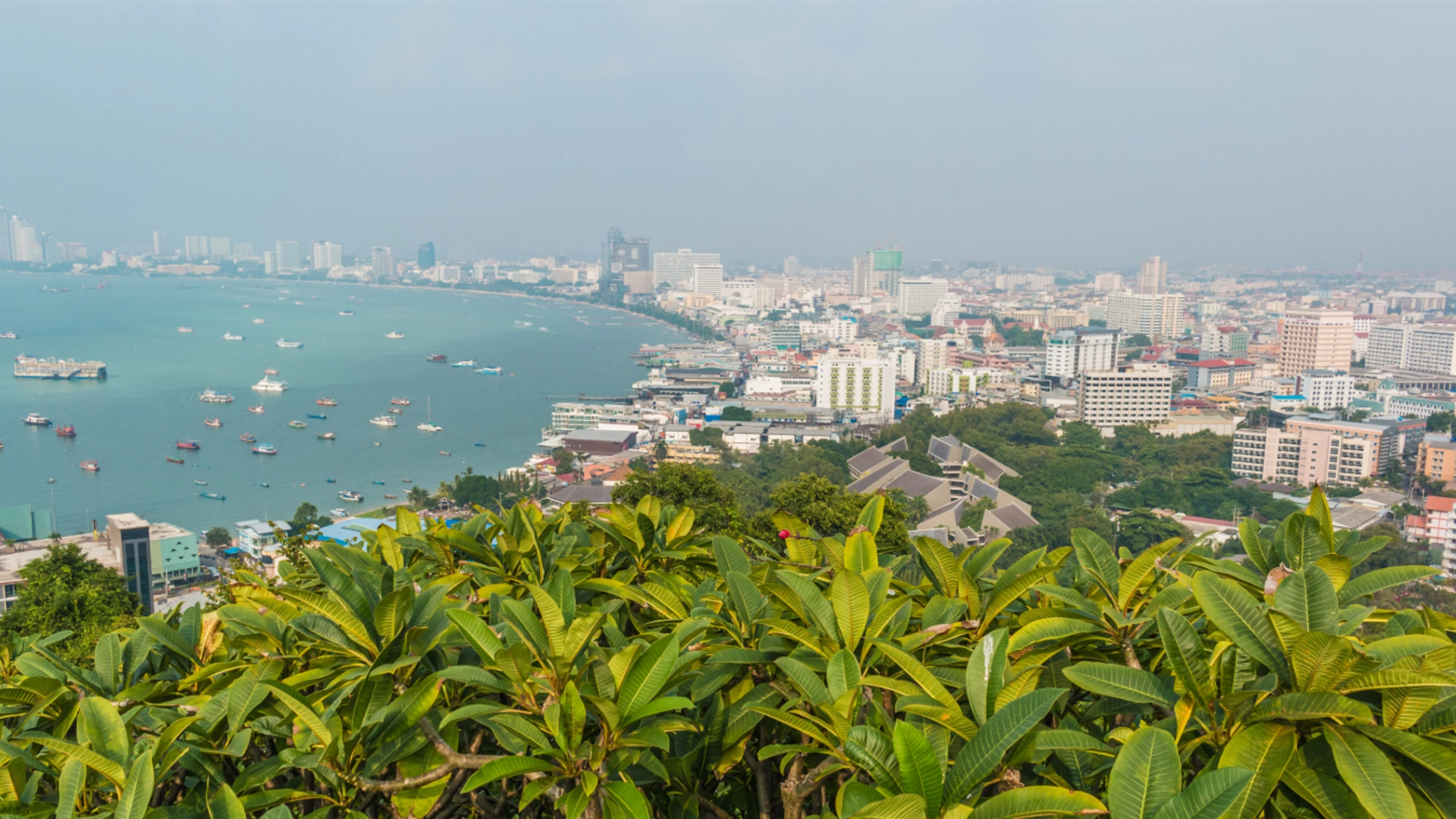
In recent years, Bali has established itself as a favorite destination for tourists and investors, attracted by its unique culture, nature, and opportunities for life. However, unlike many other places, Indonesia applies strict rules regarding land ownership - foreigners they are not allowed to buy land with full ownership (This ban is a deliberate policy to protect local interests. dsgpay.com. Instead, foreign capital finds creative and legal ways to possess a 'piece of paradise' - through a long-term lease (leasehold), right of use, or investments through a local company. Thus, Bali becomes an example of how a country can simultaneously restricts the direct purchase of land from foreigners and at the same time to welcomes them as long-term guests and investors. The result is a balanced environment in which tradition and the local population are protected, and Foreign capital receives regulated "access" to the real estate market without breaking the law.
Strategic vision and development of tourism
The Indonesian government has long recognized Bali's potential as a global tourist magnet. In 2019, the island welcomed 6.23 million foreign tourists (out of a total of 16 million for all of Indonesia) aseanbriefing.com, and tourism revenue is a significant part of the local economy. After the pandemic, Bali made powerful recovery – in 2023, over 5.3 million international tourists were recorded (a 140% increase compared to 2022), and up to 7 million are expected in 2024. spacecoastdaily.com. This revival encourages the government to diversify and upgrade the infrastructure on the island. At the national level, the aseanbriefing.comHowever, Bali itself also attracts significant investments: in 2024, the realized investments in the province reached 36.5 trillion rupiah (≈€2.2 billion), and the target for 2025 is 45.6 trillion rupees and over 53,000 new jobs baliexpat.com.
Infrastructure projects: The state and local authorities are initiating numerous projects for sustainable growth. At the investment forum BaliJagadhita 2025 14 strategic projects were proposed with a total value of 1.84 trillion rupees - from development of an electric vehicle ecosystem in Denpasar and solar power plants To expansion of airport infrastructure in North Bali (Buleleng) baliexpat.com. The goal is to diversify the economy beyond tourism, as currently 94% of the investments are concentrated in the service sector (real estate, tourism) and mainly in the southern part of the island baliexpat.comThe government incentivizes projects in agriculture, fisheries, and green business through tax breaks – according to Government Regulation No. 24/2019, investors receive simplified licensing regimes and tax incentivesif their projects increase the income of the local community, protect the environment, implement technologies, and create jobs baliexpat.comBali's economic growth forecasts are optimistic – a 5.0–5.8% GDP growth is expected in 2025, supported by controlled inflation, improved competitiveness, and strong business optimism. baliexpat.com.
Quality tourism and cultural focus: The re-elected for a second term governor Wayan Koster follows a vision for "tourism based on culture, quality, and dignity" baliexpat.comIn 2025, strict rules for foreigners were introduced: respect for temples and traditions, decent attire in public places, payment of a mandatory tourist tax, and compliance with the laws (e.g., driving with a local license and registered vehicles). baliexpat.comIndecent displays, pollution (e.g. plastic waste), and the violation of sacred sites are prohibited, with offenders subject to sanctions and even prohibition of access to tourist sites baliexpat.comThese measures may sound restrictive, but their goal is to improve the quality of tourism and to protect Bali's image as "organized, high-quality, and worthy destination" according to local standards baliexpat.com. Simultaneously, the authorities tactfully channel the growing foreign interest in real estatein the first half of 2023, requests from foreigners to purchase houses in the areas of Kuta, Seminyak, Canggu and Uluwatu (Badung Regency) have increased by 92% compared to the previous year spacecoastdaily.comDenpasar notes an 811% increase in interest, with Bali topping the charts for foreign property searches in Indonesia spacecoastdaily.com. This "property boom" is accompanied by the rise of new legal frameworks – the government introduced long-term visas (Golden Visa, Second Home), allowing wealthy foreigners to reside legally and invest right here spacecoastdaily.com.
Urban development and sustainability
Bali follows the principle that Development should not come at the expense of nature and cultureThe island has unique building regulations aimed at preserving the aesthetics of the landscape. With Regional Ordinance No. 16/2009 it is forbidden for any building to exceed the height of a coconut palm (approximately 15 meters) newsbytesapp.comThis rule, known as the Three Hits Karanathat dictate harmony between humans, nature, and the spiritual world newsbytesapp.com. Exceptions are allowed only for specific public buildings (towers, lighthouses, church towers, safety infrastructure), but in general The new buildings should blend into the landscape, but not to dominate it newsbytesapp.comThanks to this legislation, Bali has no skyscrapers - even luxury hotels extend horizontally, interwoven between palm groves and rice terraces.
Bali's urban vision relies on sustainable development led by local communitiesThe concept TriHitaKarana is integrated not only in the architecture, but also in the investment initiatives – All new projects are evaluated against their contribution to the environment, society, and spiritual heritage baliexpat.comFor example, among the proposed projects for 2025 are botanical gardens, eco-tourism in Kintamani, green industrial zone in Dzhembana and modern rest areas along the roads, which, besides amenities for tourists, will promote local artisans and farmers baliexpat.comAt the same time, local residents are increasingly actively participating in the planning - in 2024, for example, the community in the village of Sese (near Canggu) through a petition The construction of the megacomplex on the beach was stopped., fearing a negative impact on the environment and the traditional appearance of the area newsbytesapp.comInvestors listened and froze the project, which shows that Public opinion in Bali has real weight in shaping the future of the island.
All these measures guarantee that The property in Bali is not just square footage, but a part of the living fabric of the islandBut a new home or villa here comes with the unspoken responsibility to respect and maintain the surrounding environment and culture. In return, the island promises to remain attractive even after decades, with preserved beaches, clean air, and local authenticity – something that mass tourism in many other places has already ruined. In other words, Bali sells a way of life, not just a property, but this way of life is carefully planned to be sustainable even after 50 years.
Tax and investment environment
The Indonesian government has purposefully created a framework that both restricts the direct acquisition of land by foreigners and allows them to safely invest in real estate through alternative rights. The Constitution and the Agrarian Law (UU 5/1960) determine that only Indonesian citizens can have indefinite ownership of land (SertifikatHakMilik – SHM) azurebali.com. Instead, foreigners are provided with the following legal options baliexception.com:
- Right of use (HakPakai) – gives a foreigner the right to use land or a dwelling for a specified period, usually 30 years with a possibility for continuation. Used for residential purposes and assumes the existence of a residence permit (e.g. KITAS). Allows practically to "possess" house or apartment without owning the land dsgpay.comBy law, a foreigner can have only one property for personal habitation under HakPakaiwhich must not be rented out or sold for profit dsgpay.comThe minimum property value for Bali is regulated – between 2 and 5 billion rupees (approximately $130,000 – $325,000) depending on the type and location dsgpay.com, in order to direct foreigners towards the middle and luxury segment of the market. This ensures that foreign buyers invest significant capital and contribute to the local economy.
- Right to long-term lease (HakSewa or leasehold) – represents lease agreement for land or property for 25–30 years with the option to continue. This is the simplest path: the foreigner concludes a notarial contract with the owner (Indonesian) and prepays the rent for the entire termIn return, they receive full rights to use the property, to build on it, or to rent it out to third parties for the period. A lease agreement over 3 years can be registered in the Land Registry as a real right, which provides additional security. Leasehold properties are popular – many foreign investors prefer this model as a quick and flexible way to acquire a vacation home; contracts overwhelmingly include a clause for extension for another 20+ years by agreement between the parties azurebali.comIn practice, a 30-year lease in Bali is often traded on the secondary market like property, with its price increasing over the years. Important advantage is that there is no requirement for the buyer to have local status – leasehold It can also be acquired by a foreigner residing abroad, as formally they are renting, not buying the land.
- Right to build through a company (HakGunaBangunan – HGB) – this is an option for larger investors or those who want full operational proficiency on a property. The foreigner creates an Indonesian legal entity – PT PMA (Foreign Investment, a company with foreign capital), which by law can acquire land with building rights for 30 years, with an extension of another 20 + 30 years (total up to 80 years) baliexception.comThe company can be 100% its own property and buy both houses and land plots on which to build baliexception.comIn practice PT PMA provides almost the same security as freehold ownership – HGB The certificate is in the name of the company controlled by the foreigner. There is a requirement for minimum investment plan of 10 billion rupees (approximately $1,200,000) and contributed capital of at least 251,000 from this amount baliexception.com, as well as registration with the Investment Coordinating Board (BKPM). In return, the investor receives flexibility – the property of PT PMA can be used for both personal use and business (e.g. vacation rentals, hotels, offices), without the restrictions that exist for personal use Hak Pakai baliexception.com. PT PMA is essentially the ticket to 'full-fledged' ownership for foreigners willing to develop a business and invest more significant capital.
Alongside these main options, there are also informal approaches, such as purchasing through a local trustee (the so-called nominee structure) or marriage to an Indonesian citizen - but they hide legal risks and are not recommended, because the law does not recognize a foreigner as an owner even under a hidden trust agreement worldestate.homes. Instead, the Indonesian state encourages foreigners to use the official mechanisms, which are sufficient flexible and protected by law.
Taxation: Property transactions in Bali are taxed with moderate, fixed taxes, which are significantly lower than the typical "profit taxes" in many Western countries. Upon purchase and sale The buyer pays a 5% transfer tax (BPHTB) on the value, and the seller – 2.5% income tax (which replaces the capital gains tax) dsgpay.comThese rates are final and simplify the transaction – there is no additional tax on the price difference or annual revaluation as in some countries. In addition, notary fees (around 1–2% for the preparation of the deeds) and small legal expenses are charged. dsgpay.com, which are usually at the buyer's expense, as well as a 3–5% agent commission (payable by the seller) dsgpay.com. Annual tax on land and buildings (PBB) is symbolic - about 0.1-0.5% of the tax assessment of the property dsgpay.comIt is important to note that Indonesia no inheritance tax – upon the death of the owner, the property is inherited by his successors (provided they meet the conditions, e.g., are citizens or sell/transfer the right within the legal deadline). There is also no annual low-cost.
Regulations and incentives: Indonesia has been undertaking reforms in recent years to facilitating foreign investmentWith the adoption of the Omnibus Jobs Act (2020) and the subsequent Government Regulation No. 18/2021, the procedures for acquiring property by foreigners were simplified: the requirements for a long stay before purchase were removed (a valid is now sufficient KITAS or visa), foreigners are allowed to own apartments in a condominium (stratatitle) on land with building rights investmentpolicy.unctad.org, and the minimum price thresholds were updated to reflect market realities. As a result The market has become more transparent and accessiblemore and more new complexes in Bali directly offer housing with HakPakai for foreigners or leasehold agreements, without the need for roundabout schemes dsgpay.comThe government even finalizes the concept of a "golden visa" – 5- or 10-year residence permit in exchange for a large investment – which further encourages wealthy individuals to invest capital in the country (see below). At the same time, Indonesia retains currency and capital freedom – foreign investors can freely repatriate their profits after paying the due taxes; there is no currency control to hinder transfers out of the country. Thus, the country positions itself as "investor-friendly" jurisdiction, although under its own conditions - the land remains Indonesian, but The right to use it or build on it is given generously and securely to those who follow the rules.
Security and order
Bali has long been famous as a peaceful and hospitable place – one of the safest tourist regions in Asia finnsbeachclub.comThe serious crimes on the island are extremely rare – according to international statistics, the level of violent crimes (e.g. murders) is among the lowest in the world (around 0.4 per 100,000 people) finnsbeachclub.comThe cases of attacks on tourists are isolated and shocking for the local community, which is proud of Bali's reputation as the "island of the gods and peace." Of course, as in any popular destination, there is petty crime - pickpocketing in crowded markets or theft of unattended belongings occur, especially in busy areas. exotiqproperty.com. But these risks can be minimized with common sense, and Local authorities are making efforts to maintain order.. Specialized ones operate on the island tourist policewho patrol the resort areas and assist foreigners in need. The Balinese themselves, following their Hindu culture of karma and hospitality, have deep respect for visitors – Most guests feel safe and welcome still from the airport exotiqproperty.comMillions of tourists visit Bali annually. without incidentswhich makes security an integral part of the island's economic success.
The authorities maintain strict public order, commensurate with the economic ambitions of the region. The traffic police, although against the backdrop of chaotic traffic, adhere to the rules - foreigners are required to have a valid international or local scooter driving license, helmets are mandatory, and recently checks for illegal transports (Uber, Grab) and incompetent translators/guides. All this is part of the effort to improve the quality of services and safety for visitorsVideo surveillance has been introduced in tourist areas, and in case of more serious violations (for example, drugs, which are a serious crime under Indonesian law), action is taken swiftly. The result is that Foreign investors and residents enjoy a peaceful life, rarely overshadowed by criminal concerns – something key when choosing a destination for a second home. As the locals say, "If you treat Bali with respect, Bali will reciprocate." – this unspoken maxim maintains social peace and gives confidence to everyone who has invested funds and emotions in this paradise, that His personal security and his investment are protected.
Protection of property investors
Real estate is often a significant investment, especially in a foreign country - that's why Indonesia has introduced strict procedures ensuring transparency and protection for both the buyer and the sellerAll real estate transactions must be carried out before licensed notary performing the function of a land registry officer (PPAT) dsgpay.com. This notary is not just a witness – He checks the property rights, certifies the contract, and is responsible for its registration in the State Land Register (SLR)In practice, no sale or long-term lease is valid without a notarized deed.Deed of Sale for sale, AktaSewa for rent), signed by the parties and certified by PPAT dsgpay.com. This creates escrow effectthe notary acts as an independent guarantor that The transfer of ownership and the payment happen simultaneously and correctlyIt is common practice for the buyer to deposit a deposit (e.g. 10–20% of the price) into an escrow account with the notary or agency upon signing a preliminary contract. worldestate.homes, then the notary performs thorough inspection of the property – certificate validity, existence of encumbrances or mortgages, paid taxes, compliance of the property with the urban plan and intended use worldestate.homesIf problems are found, the deal is stopped and the deposit is returned, which protects the buyer from fraud or hidden defectsOnly after a successful due diligence is the final one prepared main contract (usually bilingual, in Indonesian and in the buyer's language) worldestate.homesThe transfer of rights takes place in the presence of a notary – the buyer transfers the remainder of the amount, the documents are signed and The notary registers the new owner/user in the BPN dsgpay.com. Notary fees and legal structure
An important detail that is often misunderstood: notary fees in Indonesia are always at the buyer's expense, regardless of whether the property is acquired from the secondary market or directly from a developer in new construction. Usually, these fees amount to around 1%, (sometimes up to 2% in more complex cases) and cover the full legal package: preparation of all deeds, verification of ownership and encumbrances, registration in the land registry and issuance of the final title. The notary in Indonesia (PPAT) performs a role similar to a lawyer and registrar at the same time, which reduces the need for a separate lawyer, although some foreign investors prefer to hire an additional legal advisor for greater security.
In transactions with new construction (off-plan), the commission to the agency is usually covered by the seller (investor) and is already included in the price of the property, while the notary fees remain entirely for the buyer. The practice in Bali provides that the buyer also pays the deposit to a trust account - usually 10-20%, which is held until the finalization of the legal check and the signing of the final act. This strictly regulated procedure, combined with the clear role of the notary, creates a stable and transparent environment that investors highly value. The new title (certificate for HakPakai, or an updated record of HakMilik/HGB with registered lease) is officially issued by the Land Registry in the name of the buyer, with which his right becomes indisputable and protected by law.
This process, although strict, is created in the interest of investors. The risk of bad faith transactions is minimized – there is no “hidden mortgage” or double sale that will come to light after the purchase, because the notary has checked everything in advance. In off-plan construction, there are also established practices for protection: Payments are staggered in stages according to the construction progress, often with a deposit in escrow, and the buyer receives a notarized right to the future property. Large developers voluntarily apply these mechanisms because market trust is key - it is no coincidence that new villa complexes in Bali are often snapped up even before the first sod is turned. Examplein 2023, after the borders opened, several elite projects in Canggu and Uluwatu sold out completely foreign quotas within days, as investors know their money is protected and the projects will be completed according to the contract (a similar situation, described in Thailand, is already being observed here) worldestate.homes. In addition, the law requires the payment of all due state fees (approx. 7.5% of the total value) before registration – this ensures official registration to the property in the name of the new owner/tenant, without which the transaction has no legal weight dsgpay.comUltimately, Acquiring property in Bali today is not only attractive but also a secure undertaking – based on clear regulations, professional services, and a market that values reputation.
Long-term visa options for foreign investors
It's one thing to buy property, and another to be able to stay and enjoy it long-term. Indonesia traditionally issued short-term visas for tourists, but in recent years has taken steps to attract wealthy foreigners, digital nomads, and retirees through special long-term visa programs - an analogue of the Thai LTR and "Elite" visas. During September 2023 the authorities announced the so-called "Golden Visa" – 5- or 10-year residence permit against investment in Indonesia imigrasi.go.idThe conditions are deliberately high: an individual investor can get a 5-year visa if they invest minimum $350 000 in Indonesian government bonds, shares of local companies, or a bank deposit imigrasi.go.id. For a 10-year visa, the threshold jumps to $700 000 imigrasi.go.idAlternatively, establishing a company with a direct investment from $2.5 million provides a 5-year visa, and 1.5 million – a 10-year one goldenvisas.com. For corporate top investors, the requirements are even higher (company directors with a $25 million investment also receive a 5-year status) imigrasi.go.id. Golden Visa it is not a mass program, but it is aimed at "high-class investors"which will contribute significantly to the economy - that's why the privileges are essential: long stays without the need for frequent extensions, the right to enter and exit freely without queuing for temporary permits every time you return to the country imigrasi.go.idHolders of golden visas are expected to also receive benefits in business activities (e.g., the right to work or expedited licenses), although the details are being finalized as of 2024. The government openly stated that it aims to attract through this program quality investments, like those made by the UAE, Singapore, and other countries with their imigrasi.go.id.
A second key initiative is the so-called "Second Home Visa", introduced at the end of 2022. It provides 5 or 10 years of residency on wealthy foreigners, pensioners or professionalswho want to settle in Indonesia without working under a local employment contract fragomen.comThe main requirement is financial - the applicant must prove the existence of at least 2 billion rupees (approximately $1,300,000) in the form of savings deposited in an Indonesian state bank goldenvisas.comInitially, this amount was required as a blocked deposit for the entire visa period, which drew criticism, but in 2023 the conditions were eased – proof of property ownership of a similar value or investments in Indonesian securities are also accepted. flado.id. Second Home the visa does not give the right to work (unlike some Thai programs), but allows the holder to live freely in Bali and all of Indonesia for 5 or 10 years, to open a local bank account, to manage their businesses, and most importantly – to buy real estate with status Hak Pakai fragomen.comActually, this visa combines the features of an investor, pensioner, and resident visa in one. fragomen.comIt has no age restrictions (unlike the traditional retirement visa (KITAS Retirement), which is only for those over 55 years old.) fragomen.comIn this way Second Home Visa became a kind of "digital nomad visa", although it officially does not allow work, because thousands of affluent remote workers and online business owners use it to reside long-term in Bali with their foreign income. In combination with the lack of tax on foreign income for individuals who do not acquire the status of a local tax resident, Indonesia provides these residents financial freedom – they can spend their money locally without being taxed additionally, as long as their income comes from abroad.
Besides the above innovations, there continue to exist traditional visa regimes, which foreigners flexibly take advantage of. For example, investor visa (Investor KITAS) allows a person who establishes PT PMA and invests at least 1.25 billion rupees (~€75,000) in capital, to receive a 1- or 2-year residence permit with the right to manage their business. Pensioner visa (Retirement KITAS) also provides an annually renewable stay for individuals over 55 years of age who have proven an income of over $2,000 per month and have rented local housing - it is more accessible, but shorter-term and also prohibits work. For much younger expats, the option of business visas and social visas – 6-month multiple-entry visas, with which many Over 80 countries, including Bulgaria, are entitled to a visa regime of 'visa-free entry for 30 days' or a visa on arrival.VoA) – this makes it easier for property owners to stay short-term repeatedly if they do not want or do not meet the conditions for a long visa. The general message is clear: Indonesia, and specifically Bali, they want a foreign presence that contributes positively - be it through capital or through cultural exchangeTherefore, these guests are offered legal, long-term "home away from home", as long as they are ready to invest in the mutually beneficial future of the island.
High yield and low risks
Bali's real estate market, supported by booming tourism, demonstrates yields that significantly exceed European and even many Asian marketsInvestments in vacation villas and rental apartments bring impressive returns: the average gross rental income on the island are about 8–10% annually, as with the most sought-after properties in Seminyak, Canggu, or Uluwatu can also reach 15% azurebali.comThis is due to the constant flow of tourists - in the peak season, luxury villas are rented out for hundreds of dollars a night, and occupancy is high almost year-round thanks to the climate and diverse events (surf competitions, festivals, retreats). Many foreign owners cover their expenses and make a profit from just a few months of renting, while using the property for themselves the rest of the time - a model that has become extremely popular and which encourages more purchasesIt is indicative that after the pandemic, the demand from foreigners not only recovered, but explodesin 2023, the interest of international buyers in properties in Bali has increased by 85% compared to the previous year, which equals ~764 million USD in fresh investments, mainly directed towards new construction spacecoastdaily.com. This capitalism led to construction boom – Boutique complexes and villas, tailored to foreign tastes, are springing up everywhere in the southern part of the island.
Even more impressive capital growth on the properties. Unlike many developed markets where prices grow slowly, prime locations in Bali are experiencing double-digit annual growth. According to local agencies, property prices have increased by an average of ~7% annually over the past 5 years, with growth being faster in some areas investlandbali.com. Example: Three-bedroom modern villa on a 500 sq.m. plot, 1 km from the beach in Canggu, cost around 8.5 billion rupees in 2019, and in 2023 its price reaches 12.5 billion rupees – increase by ~47% over 4 years exotiqproperty.comThe main driver is the increase in land prices: in the same period, the value of free land in the area has jumped from ~1 billion to 1.5 billion rupees hey (100 sq. m), that is 50% height exotiqproperty.comThis means that early investors who purchased plots before the pandemic are now seeing huge unrealized gains. The island is also catching up in price compared to other top resorts – although properties are still cheaper than those in Hawaii, the Maldives, or French Polynesia, the difference is decreasing with each year of double-digit growth. independentaustralia.net. In 2024, Bali even reported the biggest annual price jump so far – 10–20% depending on the segmentthanks to the record number of tourists and the limited supply of real estate independentaustralia.net.
All this happens at relatively low risksThe market is well-regulated, there is no overbuilding of the Demand structurally exceeds supply – the island has natural boundaries and cannot infinitely increase its capacity, while those wishing to live and vacation here continue to grow. The legal system already offers foreigners clear ownership status (although limited) - each certificate HakPakai or HGB bears the registered name of the foreign investor or their company, which is recognized by the court and institutions. In case of a dispute or the need for enforcement (e.g., eviction of a non-compliant tenant), the foreigner has the same legal protection as a local owner. Last but not least, Indonesia's financial system is stable and does not foresee any sudden movesthat would shock the real estate market - on the contrary, the central bank carefully monitors real estate loans and prevents overheating. Until 2023, Indonesia did not even participate in the global automatic exchange of bank information (CRS) dsgpay.com, which unofficially made the country a quiet haven for private capitalAlthough regulations have recently been brought into line with international standards, Indonesia continues to discreetly value financial privacy – yet another reason for wealthy investors to feel comfortable here.
Conclusion: The same can be said about Bali as is said about Indonesia itself – "unity in diversity", but applied to the investment climate. The island manages to combine seemingly contradictory elementsstrict restrictions (land is not sold) with open doors (invest, live here for 10 years); booming tourism with preserved culture; high profits with low risks. This is not a product of chance - but of conscious national philosophythat wealth and development must go hand in hand with respect for local values. If we accept that our personal freedom and well-being include the right to live in the way we choose, then Bali is one of the few places where this freedom is not just tolerated, but encouraged – as long as we appreciate the land and the people who make it so special.
Helpful sources:
- Indonesian Ministry of Agrarian Affairs and Spatial Planning (ATR/BPN) - Official Website: atrbpn.go.id
- Regulation on Foreign Ownership of Property (Government Regulation No. 18/2021) – UNCTAD Investment Policy Monitor investmentpolicy.unctad.org
- Indonesia Immigration Directorate - Golden Visa (5/10 year visa for investors, 2023) imigrasi.go.idimigrasi.go.id
- Indonesia Immigration Directorate - Second Home Visa (5/10 year visa for affluent individuals, 2022) fragomen.com
- Bali Jagadhita Investment Forum 2025 – Investment Project Catalogue for Bali (Bank Indonesia & Provincial Government) baliexpat.com